


Have your nails changed color, lost their shine, become brittle and crumbling, or even fallen off the nail bed?It is likely that this is onychomycosis, or a fungus, an insidious disease that is very difficult to treat and often recurs, especially if you delay a visit to the doctor.Which doctor treats toenail fungus and what does proper treatment for onychomycosis look like?
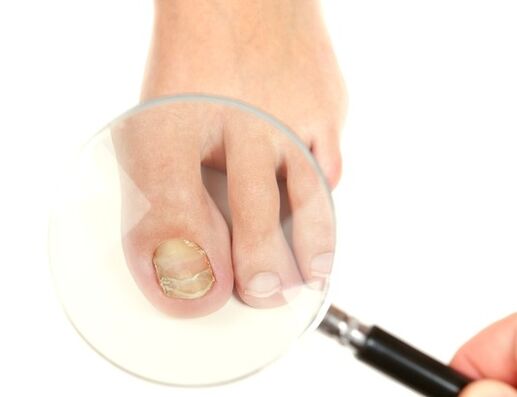
Types of nail fungus and symptoms
Fungal infections account for up to 15-40% of all nail diseases.Most often, the causative agents are trichophytons - parasitic fungi, and somewhat less often - candida - yeast fungi.Risk factors are:
- male gender;
- increased sweating of the feet;
- nail injuries;
- visiting public baths and swimming pools;
- immunosuppression due to diabetes mellitus and HIV infection, long-term use of corticosteroids;
- wearing synthetic socks and shoes made from non-natural materials.

Clinical manifestations of nail fungus are varied.Taking this into account, modern medicine identifies six main forms:
- White superficial - at the beginning, the superficial layers of the nail plate are affected, and then the degenerative process spreads deep into the tissues.Most often, this variety appears as white, crumbling lesions; less commonly, there may be white lines.
- Normotrophic - the thickness and shine of the nail remain the same, the plate only changes color, and white and yellow spots and stripes appear.
- Hypertrophic - the nail constantly thickens and becomes deformed due to the active division of skin cells located under the nail plate.
- Atrophic - the nail becomes gray-brown, while its thickness constantly decreases, as a result of which the nail bed can be completely exposed.
- Proximal – quite rare.The lesion affects the nail fold, while the final sections of the nail remain intact for a long time, that is, undamaged.
- Total – the entire nail plate is involved in the pathological process and often develops against the background of reduced immunity.
Second medical opinion
Experts from leading Russian and foreign medical institutions will give their opinions on the results of tests and examinations, comment on the previously made diagnosis and prescribed treatment.
“With onychomycosis, the nail plate often loses its connection with the underlying dermis, so it can easily be removed accidentally or intentionally.Doctors call this condition onycholysis.”
Which specialist should I contact?
Which doctor treats nail fungus?In most cases, a dermatologist will help solve this problem.The doctor will conduct an objective examination and laboratory testing to determine the cause of the patient’s dystrophic nail lesion.Only after this is appropriate drug therapy selected.
In complex clinical cases, the help of a more specialized specialist – a mycologist – is required.This is a dermatological doctor who deals exclusively with fungal diseases of the skin, hair and nails.

“If you don’t know which doctor treats nail fungus, then make an appointment with a dermatologist.Usually this is enough to establish a diagnosis and begin timely therapy.”
Diagnostic methods
If there are suspicious signs, such as changes in the shape and thickness of the nail, suspicious spots and stripes, crumbling, the doctor must conduct laboratory diagnostics before prescribing treatment.For this purpose, the altered nail plate is collected - part of it is carefully cut off with special tweezers.The resulting biomaterial is subjected to:
- microscopic examination - results are obtained almost immediately, since spores and mycelium of fungi are clearly visible under a microscope;
- cultural research - results are assessed only after 0.5-1.5 months, during which time the fungi grow to form colonies.This method allows you to identify the type of causative pathogen, as well as assess its sensitivity to antifungal drugs.
“Polymerase chain reaction—the creation of multiple copies of one piece of DNA—is used only in difficult diagnostic cases when culture cannot determine the type of causative fungus.”

Therapy
It is important to know which doctor to contact for nail fungus, since delayed treatment is not only a cosmetic, but also a medical problem.It turns out that onychomycosis increases the risk of the following conditions:
- pain and discomfort in the legs;
- difficulty walking and wearing shoes;
- disharmony in professional and personal spheres of life;
- generalization of fungal infection on the skin of the legs and arms, groin;
- infection of other family members;
- increased sensitivity of the body to fungal antigens with the development of bronchial asthma and atopic dermatitis;
- bacterial skin infections - fungi violate the integrity of the dermis, and pathogenic and conditionally pathogenic bacteria easily enter the resulting microcracks.
Therefore, treatment is necessary in all cases of diagnosed nail fungus.Therapy is divided into two types:
- Topical antifungal - the drug is applied directly to the nail plate.
- Systemic antifungal - the drug is taken orally, and through the bloodstream it reaches the “problem” site.
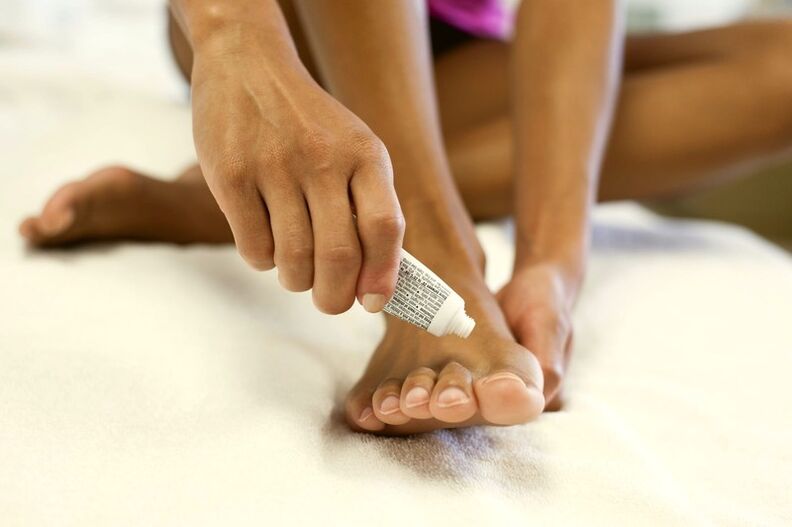
Currently, combined treatment is used for onychomycosis, when local application of the drug (medicated nail polish or cream) is combined with medication.Topical monotherapy is less effective because keratin and tightly adjacent epithelial scales prevent the drug from penetrating into the nail plate.Thus, the concentration of the active component can decrease by a thousand times.Therefore, local therapy is possible only in the initial stage of superficial nail damage and in the presence of contraindications to systemic antifungal agents.
“If one family member is diagnosed with nail fungus, the entire family is treated at the same time, since onychomycosis is a particularly contagious disease.”
After a course of treatment, the doctor must prescribe control tests - microscopy of the nail plate.If there are no mushrooms in the biomaterial, then the person is considered to have fully recovered.In the future, it is important to adhere to the rules of prevention to avoid re-infection:
- use safety shoes when visiting hotels, gyms, public baths and swimming pools;
- apply antifungal powders and adsorbents to the foot - according to indications;
- wear socks made from natural fabrics;
- trim nails regularly using individual pedicure accessories;
- replace old shoes with new ones, as they may contain a large number of dangerous mushrooms.
A simple rule: the earlier treatment is started, the more effective it is - in the case of onychomycosis it works more than ever.Therefore, do not delay your visit to the doctor if you notice that the appearance of your nail has changed.
Which doctor should I consult for toenail fungus?
If you suspect onychomycosis, you should seek help, for example, from a general practitioner.The doctor will prescribe tests, after which he will make a diagnosis and give a referral to a specialist.